AI for neurologists
Evidence-based search for neurology questions.Every answer cited.
Standard Medicine is a free, evidence-based AI search tool for neurologists. Ask a clinical question and get an answer from published literature, with a citation on every statement.



 EuropeanGuidelines
3,600+ neurology questions asked so far, among 100,000+ clinical questions across 48 specialties.
A neurology question, answered
Captured from the product, unedited. Every number has a source.
What are the most common stroke mimics?
According to international sources, stroke mimics account for approximately 20% to 50% of suspected acute stroke presentations, with seizures and post-ictal states (e.g., Todd's paresis), migraine with aura (including hemiplegic variants), and functional/conversion disorders ranking consistently as the most common etiologies. In large thrombolysis cohorts and acute registries, functional disorders (up to 30.8%), migraine (up to 17.5%), and seizures (up to 14.2%) represent the most frequently treated non-stroke conditions.
In international sources, other frequently encountered medical and neurological mimics include: • Toxic-metabolic and infectious conditions: Severe hypoglycemia, hyperglycemia, electrolyte imbalances, sepsis, and systemic or urinary tract infections causing recrudescence of prior stroke deficits are described. • Vestibular and peripheral disorders: Peripheral vestibular dysfunction (such as vestibular neuritis or benign paroxysmal positional vertigo) and Bell palsy frequently mimic posterior or lower motor neuron stroke presentations. • Structural intracranial lesions: Primary or metastatic brain tumors, chronic subdural hematomas, and demyelinating diseases (e.g., multiple sclerosis) mimic acute deficits, as described in international sources. • Transient global amnesia and encephalopathies: Transient global amnesia, posterior reversible encephalopathy syndrome (PRES), and toxic or Wernicke encephalopathies regularly simulate acute cerebral ischemia.
Ask it the way you would ask a colleague
Plain-language questions about diagnosis, risk scores, guideline thresholds, trial evidence and management, typed the way you would say them.
Every statement carries a citation
Answers are built from peer-reviewed literature, European guidelines and national guidelines. Each claim is numbered, and the reference list shows title, authors, journal and DOI.
A search tool. The judgement is yours.
Standard Medicine finds and summarises what is published, with every source one click away. The clinical decision stays with you.


Built in Stockholm by doctors and engineers. About us
What colleagues are saying
“I find Standard Medicine a smooth way to get quickly from ‘I should know this’ to a structured, clinically useful overview. I use SM both in my everyday work with patients and to go deeper into areas I come across less often.”
“Easy to use and good. I use it in my everyday clinical work to find relevant, reliable information.”
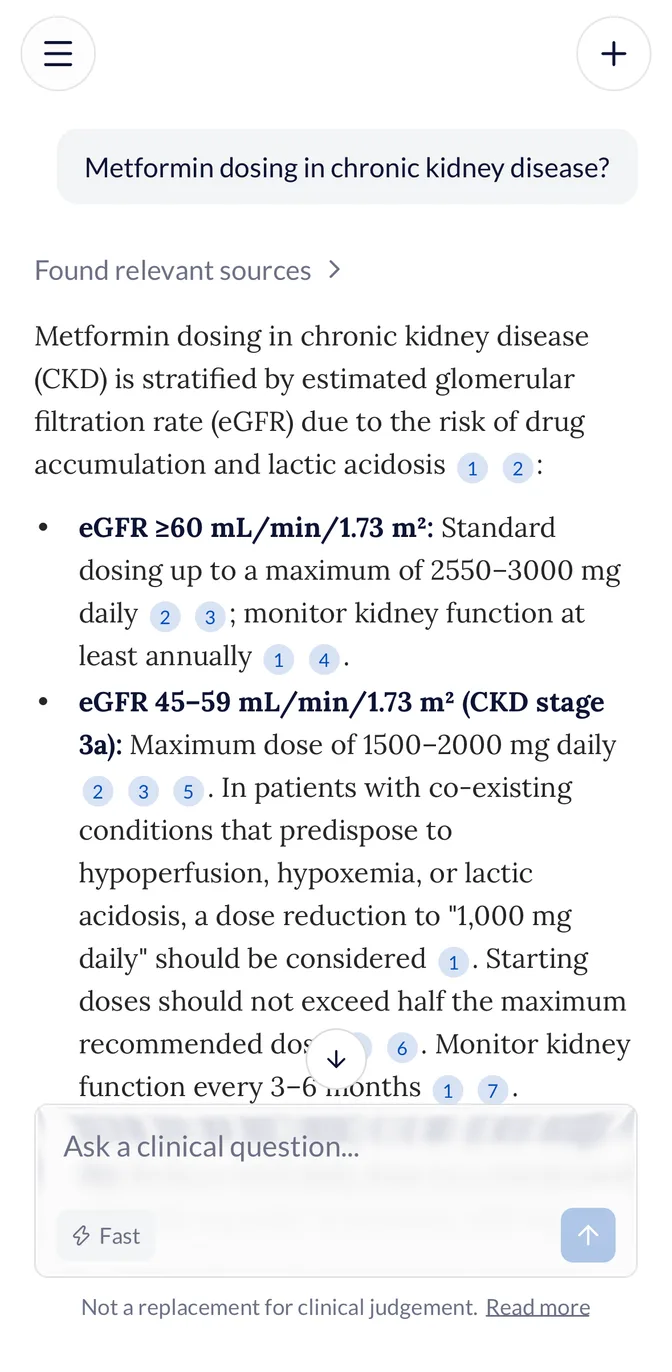
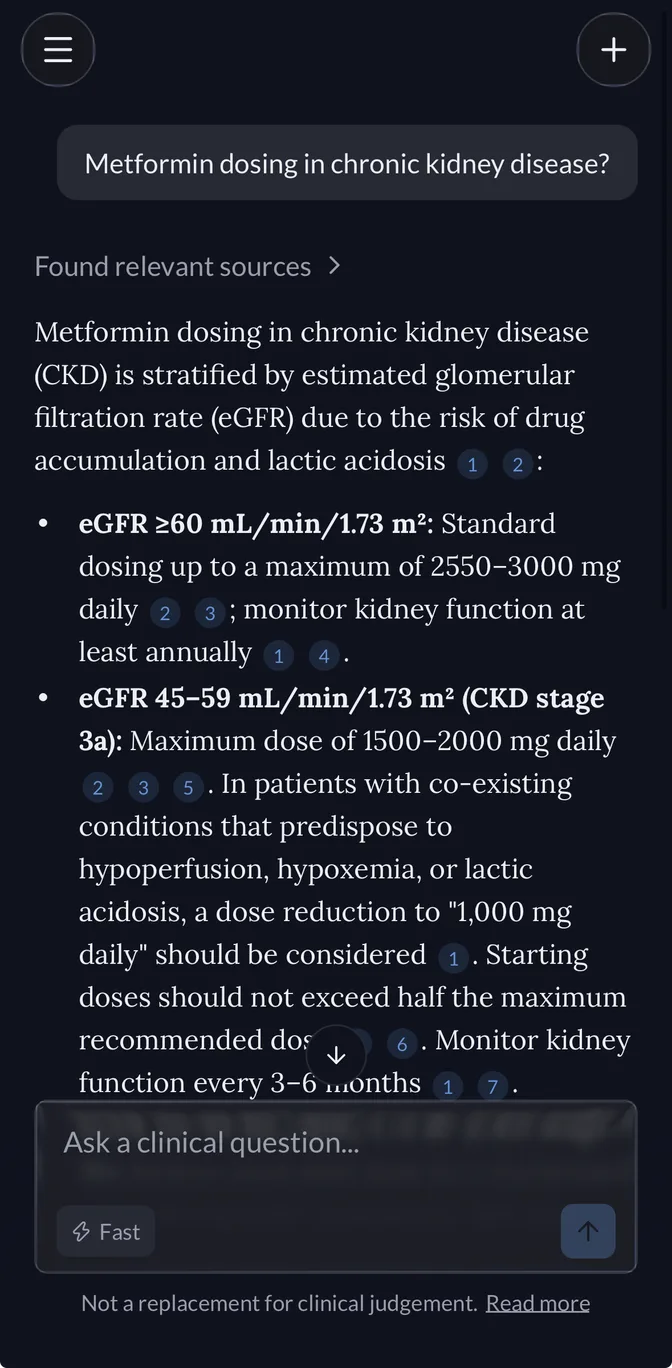
Mobile app
Evidence in your pocket
On the ward, in clinic, on call.The same sourced answers, on your phone.Free for healthcare professionals.


Common questions
Is there a free AI tool for neurologists?
Standard Medicine is free for verified healthcare professionals. Ask your first question straight away, then create a free account to keep going.
Which sources does Standard Medicine use for neurology questions?
Standard Medicine searches peer-reviewed journals indexed in PubMed and Europe PMC, European clinical guidelines and national guidelines. Every answer lists its references with title, authors, journal, year and DOI.
How is Standard Medicine different from ChatGPT for neurology questions?
Standard Medicine searches published literature for your question, attaches a citation to every statement and links to the source, so you can see what each statement rests on and read it yourself.
Do I need an account or an EHR integration to use Standard Medicine?
Standard Medicine runs in the browser and as an iPhone and Android app, separate from your patient record. Ask your first question straight away, in general clinical terms, and create a free account to keep going.
How do I check an answer from Standard Medicine?
Every claim in a Standard Medicine answer carries a numbered citation. Click it to open the source. The reference list at the end of the answer shows every paper and guideline used.
Can I use Standard Medicine in my own language?
Yes. Standard Medicine is available in English, Swedish, Danish, Norwegian, Finnish, Icelandic and French, and you can ask in your own language.